Candela
Candela (cd) is the base unit of luminous intensity in the SI system. It indicates how intensely a light source shines in a single specific direction. While lumens describe the total amount of emitted light, candela tells you how “hard” and how far the light beam reaches. Candela therefore defines the intensity of light in one direction and is a key parameter for evaluating beam throw and the blinding effect of a flashlight. Unlike lumens, which describe the total amount of light, candela determines its concentration. While household lighting typically works with hundreds of candelas, tactical lights reach tens to hundreds of thousands of candelas.
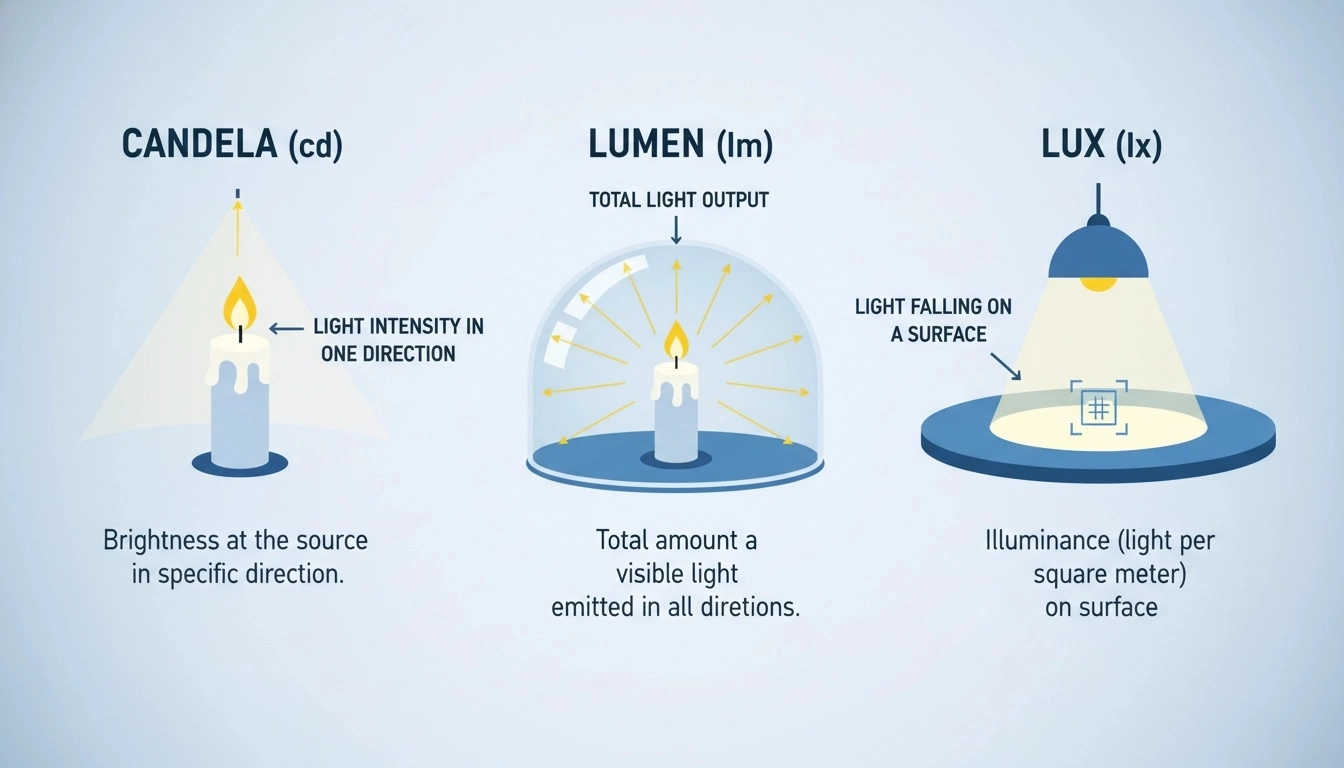
Comparison of candela, lumen, and lux units
What is the difference between candela and lumens?
These two units are often confused, but they describe different properties of light:
- Lumen (lm): the total amount of light that a flashlight produces in all directions.
- Candela (cd): the concentration of light in a single direction – in other words, how strongly the beam “pushes” forward.
Simply put: lumens = how much light, candela = how far and how intensely it shines.
Why is candela important for tactical flashlights?
For tactical flashlights, a high candela value is crucial because it:
- enables long-distance beam throw,
- can dazzle or disorient an opponent,
- penetrates smoke, fog, and rain more effectively.
A flashlight with high lumens but low candela will tend to spill light broadly rather than project it far.
Typical candela values
Household and everyday lighting:
- desk lamp: 50–300 cd
- standard LED bulb: 100–500 cd
- household headlamp: 500–2,000 cd
Tactical and high-performance flashlights:
- EDC flashlights: 5,000–20,000 cd
- tactical flashlights: 30,000–90,000 cd
- high-performance models: 100,000+ cd
Candela, beam distance, and real-world use
Beam distance is usually stated in meters and is directly related to candela. In general:
- lower cd → wide beam, short range,
- higher cd → narrow beam, long range.
That is why two flashlights can have the same lumen output but behave completely differently in the field.
Powered by Froala Editor