Nitrogen
Nitrogen Filled is a technology used in high-quality riflescopes, binoculars, and optical devices where the internal chamber of the optic is filled with dry nitrogen gas. This gas replaces regular air, which naturally contains moisture and oxygen. Because of this, the optic does not fog up, does not corrode, and remains perfectly clear even in extreme temperatures. Nitrogen filling is a standard feature in modern premium optics — used by brands such as Vector Optics and VictOptics. Nitrogen filling replaces humid air inside the optic with a dry, inert gas, preventing fogging, protecting against corrosion, and increasing the lifespan of the riflescope. Modern optics (such as Vector Optics) use it as standard. Cheaper models may still be filled with air, which is why they often fog up and are unsuitable for demanding use. High-quality Vector Optics riflescopes can be found on our e-shop.
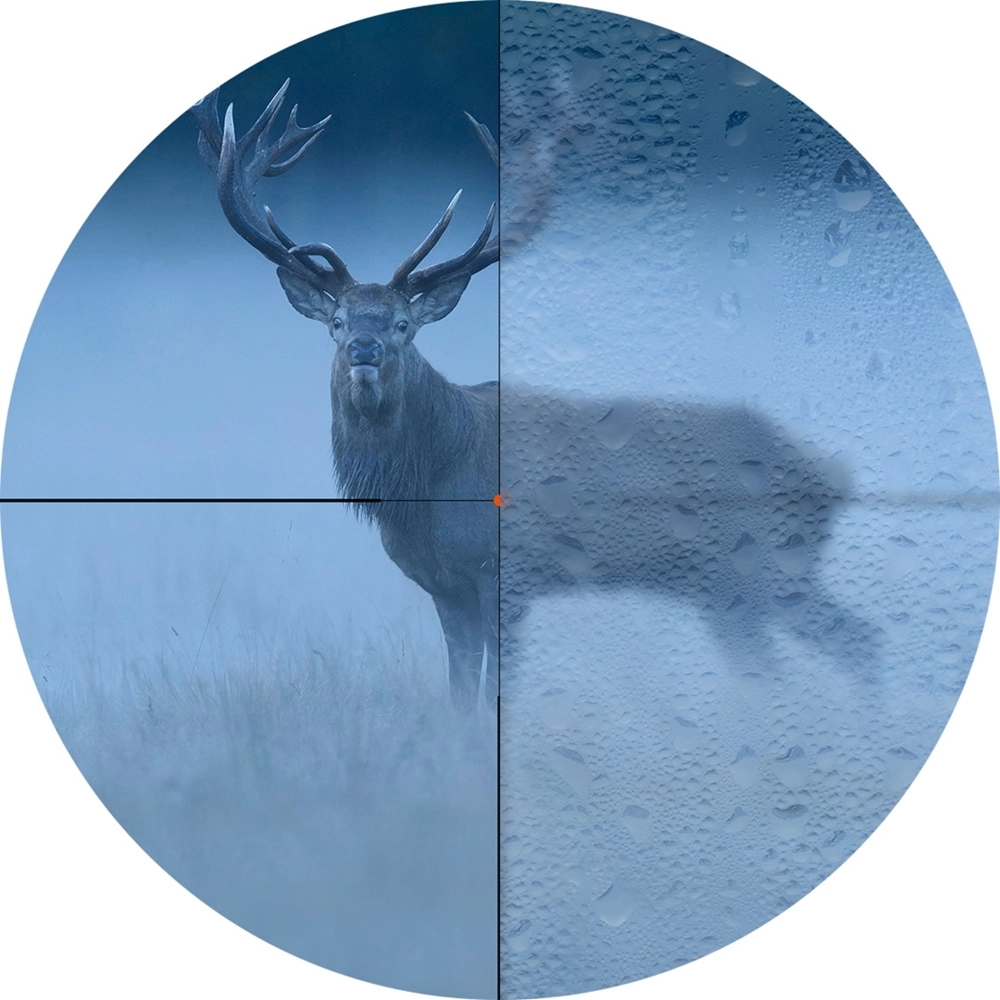
How does nitrogen work inside a riflescope?
The main purpose of nitrogen filling is to prevent condensation, meaning the formation of fog on internal lenses.
- Nitrogen is a dry gas — it contains no moisture → nothing inside the optic can condense.
- It is an inert gas — it does not react chemically and does not support corrosion.
- It prevents fogging during sudden temperature changes (for example: cold → car interior → back to freezing conditions).
- It helps maintain long-term cleanliness of the inner optical elements.
In combination with high-quality sealing (O-rings), nitrogen is one of the most reliable ways to protect optics from internal moisture.
What are the benefits of nitrogen filling?
- Fog-proof performance — sudden temperature changes will not cause internal fogging.
- Corrosion protection — without oxygen and moisture inside, metal components cannot oxidize.
- Longer lifespan of the optic.
- Higher reliability in rain, snow, freezing weather, and tropical climates.
This is why nitrogen is used in optics designed for military use, hunting, sport shooting, and airsoft.
What were optics filled with in the past?
Older riflescopes were filled with:
- regular air — contains moisture → resulted in fogging,
- dried air — an improvement, but still contained small amounts of humidity,
- argon — an inert gas similar to nitrogen, still used in very high-end optics.
Argon is even more stable than nitrogen, but also more expensive. In practical use, nitrogen offers nearly the same effect at a better price — which is why the vast majority of brands use it today.
Powered by Froala Editor