Diopters
Diopters are the unit of optical power of a lens, determining how strongly the lens bends (refracts) light. They are used to describe nearsightedness (- diopters), farsightedness (+ diopters), and other vision defects. The higher the diopter value, the stronger the correction required for clear vision. One diopter (1 D) corresponds to a focal length of 1 meter. For example, +2 D has a focal length of 0.5 m, while -4 D has a focal length of -0.25 m. In short, diopters represent the degree of a visual impairment. Riflescopes and binoculars include diopter adjustment, allowing the user to compensate for mild vision defects. Snipers and pilots may have diopters as long as their vision is corrected and does not interfere with performance; corrective surgery is also an option. In airsoft, diopter inserts for protective glasses are frequently used to ensure both safety and clear vision without compromising eye protection.
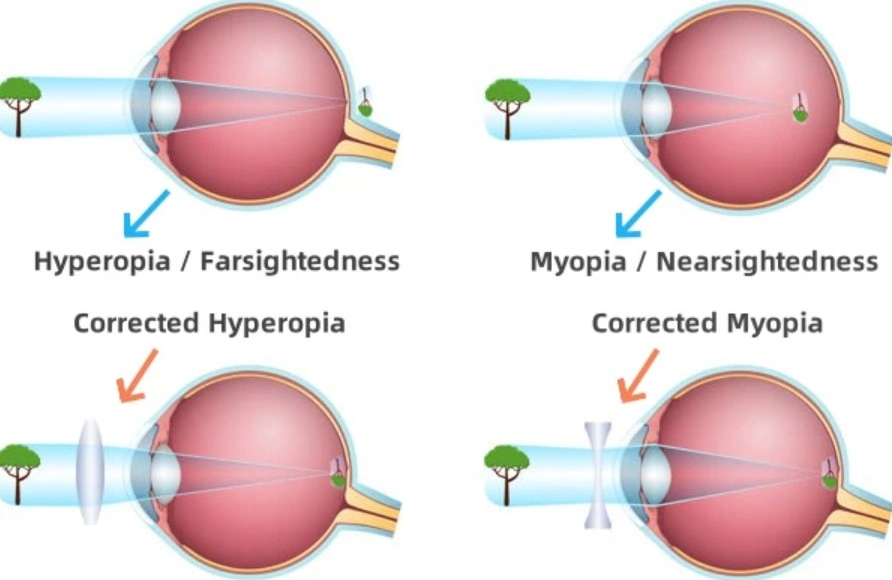
How does diopter adjustment work on riflescopes and binoculars?
Many riflescopes and binoculars feature a diopter adjustment ring located on the eyepiece. This rotating ring allows the user to focus the reticle or image sharply even without wearing glasses.
- It compensates for common near- or farsightedness.
- It focuses the reticle or image so that the shooter sees it sharply despite a vision defect.
- Its range is usually around –2 D to +3 D (depending on the manufacturer).
- Most riflescopes from Vector Optics and VictOptics offer a range that covers mild to moderate visual impairments.
However, diopter adjustment does not replace full corrective glasses – it only compensates for mild issues and helps achieve a sharp view through the optic.
Can a sniper wear corrective glasses?
Yes, they can. More than 50% of professional snipers have some form of vision correction.
- Riflescopes include a diopter ring that allows sharp vision even with a visual defect.
- Some snipers use contact lenses for more convenient use.
- Glasses may be problematic with heavy recoil (on real firearms), so contacts or optic-based correction are often preferred.
Can pilots have diopters?
Yes. Modern military aviation allows pilots to have diopters, provided that:
- the defect is not too strong,
- it is stable,
- and it is correctable with glasses or contact lenses.
Pilots often use specialised aviation glasses compatible with helmets and HUD systems. In some countries, laser eye surgery (LASIK/LASEK) is permitted if stable and complication-free.
Diopter inserts for airsoft eye protection
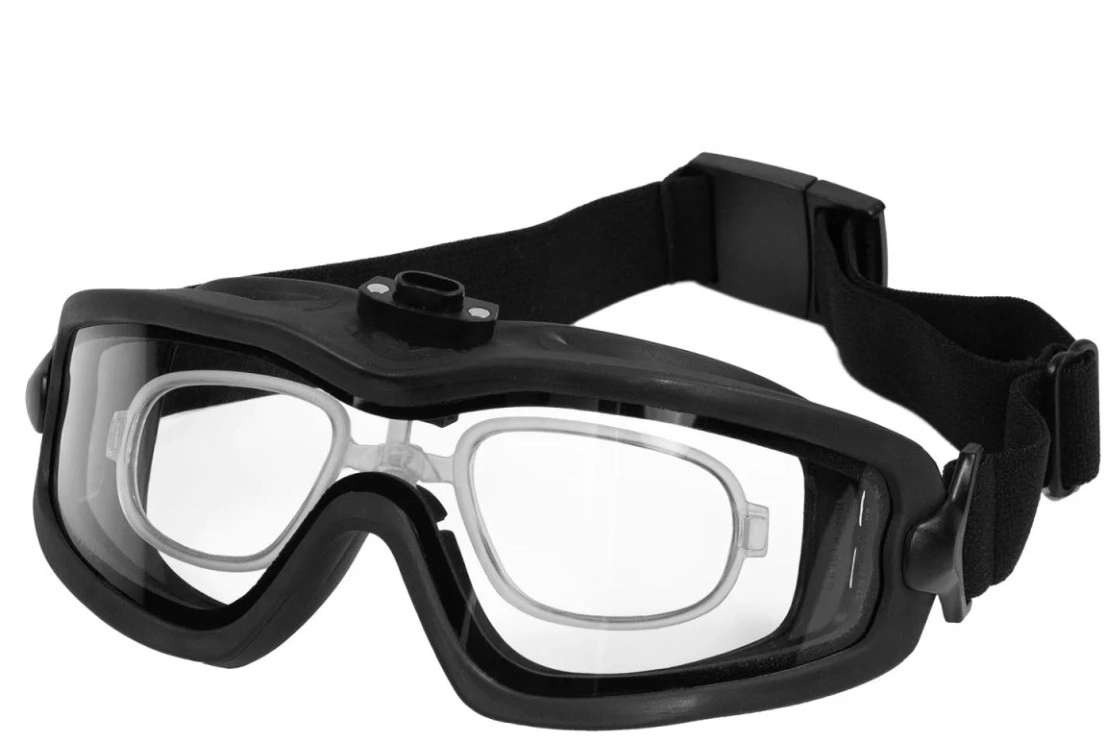
In airsoft, it is common to use diopter inserts (RX inserts). These are small inner frames placed inside protective goggles, fitted with prescription lenses made by an optician.
- Safe – they meet ballistic standards, as the corrective lens is protected by the main outer lens.
- Comfortable – you don’t need to wear glasses underneath your protective goggles.
- Compact – they do not interfere with masks or helmets.
- Used by brands such as Bollé, ESS, Peltor, Wiley X, and Novritsch.
Powered by Froala Editor