How a Red Dot Sight Works
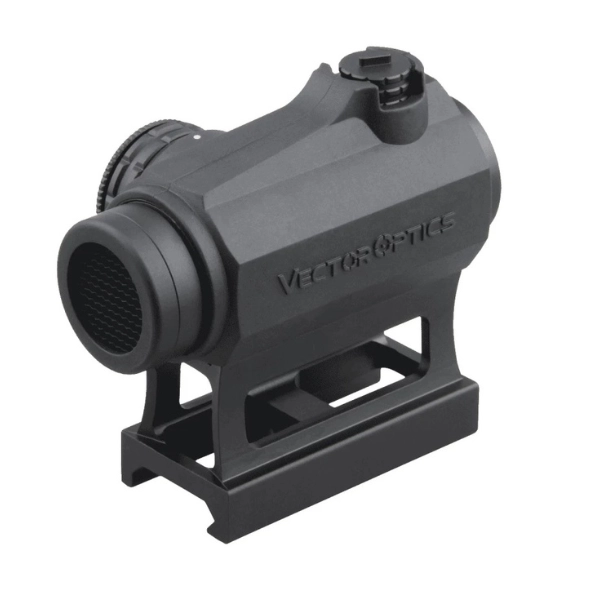
If you've ever wondered what that strange "optic without magnification" is that so many players have on their replicas, it was probably a collimator. And if you've tried it, you know that aiming through it is incredibly fast. But how does it actually work?
What is a collimator and what is it used for?
A collimator is a type of sight that, unlike a classic telescope or rifle scope, does not provide any optical magnification. Its main purpose is not to bring the target closer, but to enable quick, intuitive, and accurate aiming.
Inside, there is a light source (usually an LED) that projects a aiming point or pattern (typically red or green) onto a specially modified lens. The point appears to "float" in front of the weapon, and the shooter perceives it as being in line with the target.
This has a major advantage: wherever the dot is aimed, you aim too, without having to have your eye perfectly aligned with the sight's axis. This allows you to aim faster, from different positions, and with your eyes open, which increases your awareness of the situation.
Collimators are popular not only among airsoft players, but also in sport shooting, hunting, and paintball. They are durable, lightweight, and ideal where speed and accuracy of the first shot are crucial.
A brief history of collimators
Irish scientist Howard Grubb is considered to be the inventor of the collimator. At the end of the 19th century, he experimented with optical systems that enabled the display of a target point at infinity.
Collimators saw wider use during World War II, especially in aircraft sights. However, their real boom came in 1975, when the Swedish company Aimpoint introduced the first commercially successful collimator for handguns. Since then, it has become the standard for the military, police, and civilian shooters.
How does a collimator work?
Point display principle
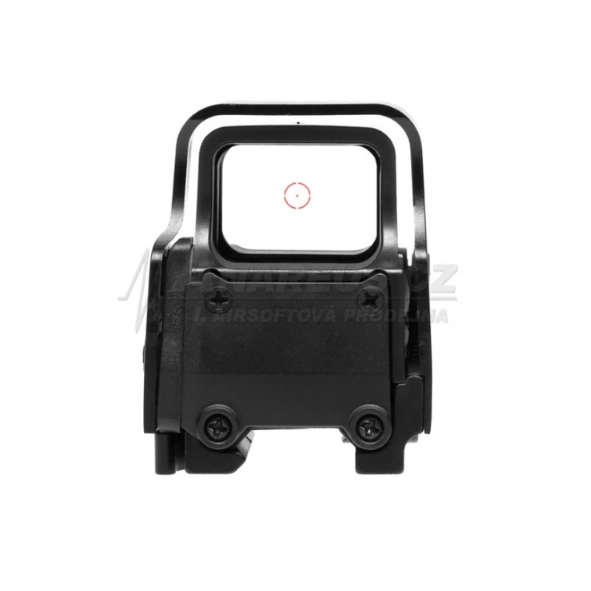
The basis is an LED diode that emits light onto a semi-transparent mirror (lens). This reflects the light spot back to the shooter's eye, but at the same time allows the image of the surroundings to pass through. As a result, the shooter sees a red or green dot "hanging" above the target without obscuring the view.
Advantages of the design
Aiming with both eyes open → better peripheral vision.
Quick target acquisition even from unconventional positions.
Zero magnification → no distortion or parallax.
Types of collimators
Collimators vary in design, size, and how they display the aiming point. Each type has its advantages and ideal use:
Open collimator
Lightweight, compact, and ideal for short distances (CQB, pistols, carbines). Offers quick aiming but less lens protection.
➡️ Check out the range of open collimators in our e-shop. Or we recommend this one here.
Tubular collimator
A robust version with protected optics, suitable for outdoor events and longer distances. Thanks to its larger lens, it provides a wider field of view.
➡️ We recommend this one.
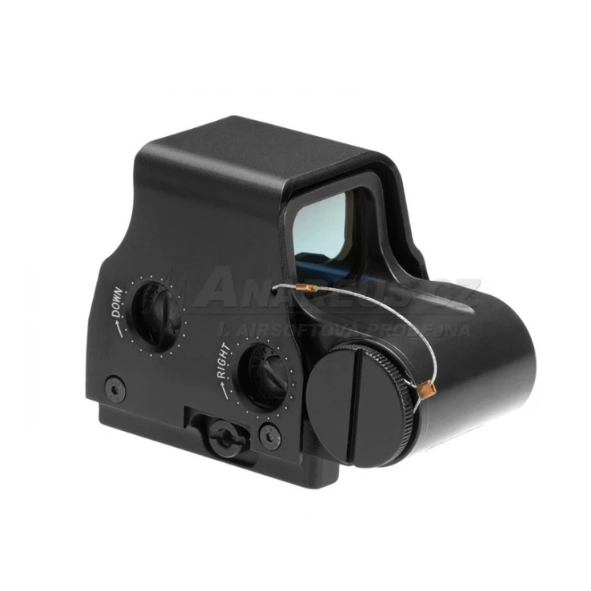
Holographic sight
It uses a laser to project a hologram of the target image. It offers better readability even in poor lighting conditions, minimal parallax, and greater accuracy when moving. Typically more expensive, but popular among professionals.
➡️ We recommend this one.
How to choose the right collimator
Game type/use:
CQB → small open model.
Outdoor events → tube or holographic.Mounting system:
Check whether you have a RIS/Picatinny or M-LOK rail.Battery and battery life:
High-quality models will last for hundreds of hours of lighting.Resistance:
If you play often, it pays to invest in a metal body with a durable lens.
Summary
A collimator will help you aim faster, more accurately, and with greater confidence. For airsoft, it is one of the best accessories that will improve your reaction time and accuracy. Our recommendation:
Start with an open collimator, and if you are attracted to precision and comfort, move on to the holographic level.
Check out our range of collimators - HERE!
Powered by Froala Editor