LiHV baterie
LiHV baterie (z anglického High Voltage Lithium Polymer) jsou speciálním typem Li-Pol (LiPo) baterií, které umožňují vyšší nabíjecí napětí až 4,35 V na článek oproti klasickým 4,2 V u běžných Li-Pol článků. To znamená, že například 3S (tříčlánková) LiHV baterie má plně nabité napětí 13,05 V, zatímco klasická 3S Li-Pol jen 12,6 V. Tyto pořádně nadupané baterie najdete i v naší nabídce.
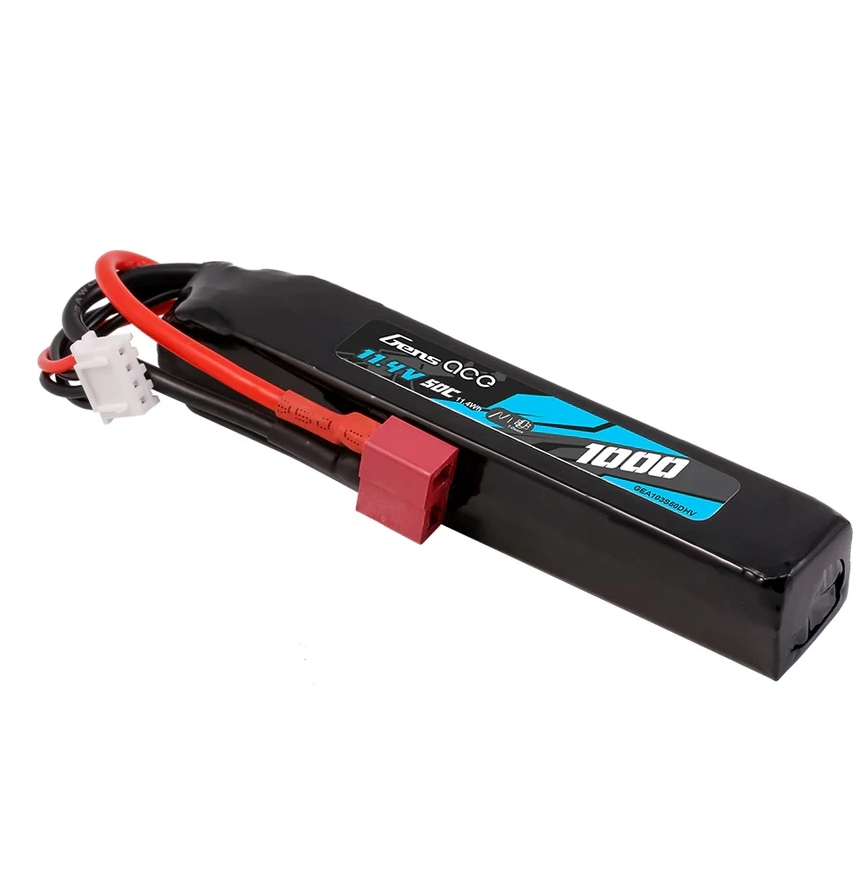
Rozdíl mezi LiHV a běžnou Li-Pol baterií:
- Vyšší výstupní napětí: LiHV nabízí vyšší výkon, zejména rychlejší odezvu motoru a vyšší kadenci (RoF).
- Vyžaduje speciální nabíječku: Nabíjení na 4,35 V/článek vyžaduje nabíječku s podporou LiHV režimu pro Li-Pol baterie.
- Kompatibilita: Lze je používat ve zbraních určených pro Li-Pol baterie, ale jen pokud elektronika a motor snesou vyšší napětí (ETU jednotky, aktivní brzdy a MOSFETy).
Příklady a výrobci:
- Gens ACE nabízí několik modelů LiHV baterií určených přímo pro airsoft – např. LiHV 11.4V 1000mAh nebo LiHV 1450mAh.
- Redox, Tattu – další známé značky vyrábějící kvalitní LiHV články.
11.4V vs 11.1V Li-Pol:
- LiHV 11.4V: Nabito na 13.05 V – vyšší výkon, lepší odezva, ale větší opotřebení dílů.
- Li-Pol 11.1V: Nabito na 12.6 V – mírnější náběh výkonu, vhodnější pro běžné použití.
Výhody LiHV baterií:
- Vyšší výkon bez nutnosti přechodu na 4S baterie.
- Lepší kadence a odezva spouště – ideální pro CQB a Speedsoft.
Nevýhody LiHV baterií:
- Kratší životnost článků při častém nabíjení na maximální napětí.
- Vyšší opotřebení motorku, spouště a převodů – doporučeno v kombinaci s MOSFETem nebo ETU.
- Nutnost kompatibilní nabíječky (např. Gens Ace iMars, Redox Delta). Běžná Li-Pol nabíječka LiHV články nenabije na plnou kapacitu.
Powered by Froala Editor