NATO
NATO (North Atlantic Treaty Organization) is a military and political alliance whose primary goal is the collective defense of its member states. The core principle of NATO is that an attack on one member is considered an attack on all. NATO is therefore a key international alliance based on the principle of collective defense, founded in 1949 as a response to post-war security threats posed by the Soviet Union (today’s Russia). It brings together dozens of armed forces that cooperate through shared standards of equipment, armament, and training. These very standards have also become an inspiration for MilSim airsoft, where players realistically replicate NATO units and their operational procedures.
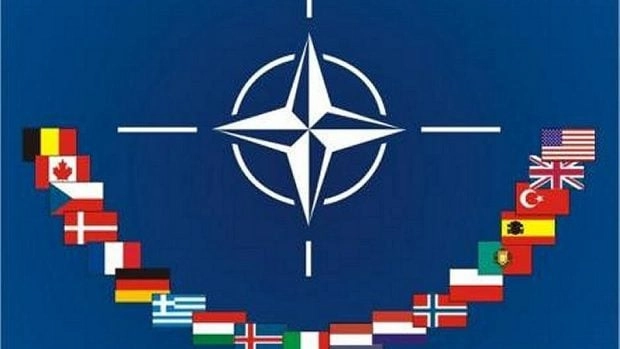
History and formation of NATO
NATO was established on April 4, 1949 with the signing of the North Atlantic Treaty in Washington, D.C. The main drivers behind its creation were:
- post-war instability in Europe,
- the growing influence of the Soviet Union,
- the need for a common defense of Western democracies.
Originally, NATO had 12 founding members. Over time, the alliance expanded and, after the end of the Cold War, became a key pillar of European and transatlantic security.
Purpose and core principle of NATO
The cornerstone of NATO is Article 5 of the North Atlantic Treaty, which defines the principle of collective defense. NATO’s main tasks include:
- deterrence of potential aggressors,
- defense of the territory of member states,
- stabilization of crisis regions,
- international military cooperation.
NATO member states
Today, NATO brings together more than 30 countries from North America and Europe. Key members include:
- United States of America,
- Canada,
- United Kingdom,
- Germany,
- France,
- Italy,
- Poland,
- Czech Republic (since 1999).
Member states retain their own armed forces but cooperate within a framework of joint command, training, and standardization.
NATO-standard equipment and armament
NATO places strong emphasis on standardization to ensure that units from different countries can operate together seamlessly. Typical features of the “NATO standard” include:
- ammunition calibers (e.g. 5.56×45 NATO, 7.62×51 NATO),
- communication connectors and radio standards,
- MOLLE / PALS webbing on gear,
- compatible magazines and accessories,
- STANAG standards (Standardization Agreements).
Thanks to this, for example, American, Czech, and Polish units can use the same ammunition, equipment, and logistics.

NATO and MilSim Airsoft
In MilSim airsoft, NATO is one of the most common sources of inspiration. Players replicate:
- the equipment and armament of NATO units,
- real-world tactics and command structures,
- communication procedures and roles.
Typical NATO loadouts in MilSim include:
- AR-15 / M4 / HK416 platforms,
- Multicam and MTP camouflage patterns,
- plate carriers with MOLLE webbing,
- NATO-standard helmets, radios, and IFAKs.
MilSim scenarios often pit NATO vs. non-NATO forces against each other, creating a realistic gameplay experience and clear team differentiation.
Powered by Froala Editor